I went into this rooting for Purple. Twenty-two nights later, I returned it.
A skeptical comparison of the Onyx AeroMatrix and the Purple Pillow — and the small, infuriating detail at 6 a.m. that decided it.

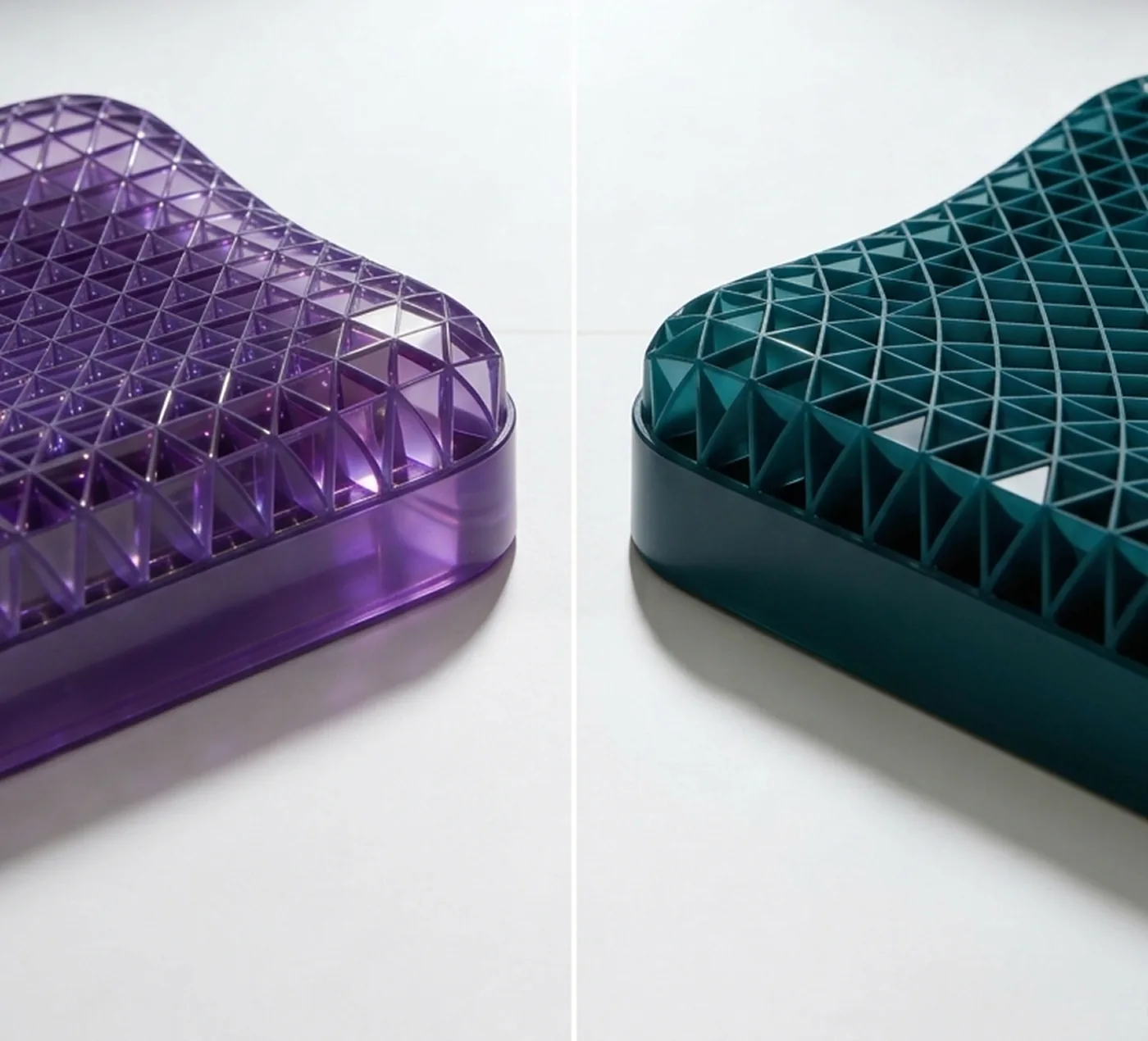
I have tested forty-something pillows in three years for this publication. Memory foam, latex, down, buckwheat, water, microbead, that one filled with husks of millet that someone keeps emailing me about. So when an editor handed me a brief that read "Onyx vs Purple," I had already mostly written the conclusion in my head.
I went into this expecting Purple to win. It's the original. It's the brand everyone knows. I have recommended Purple's grid pillow for years — to friends, to readers, to a physiotherapist I see twice a year who has now also recommended it to her patients on my say-so. Purple invented the consumer grid pillow as a product category. They deserve credit for it. I was, on day one, more or less hoping they'd win the test so I could close the file and write the easy article.
What I'm about to tell you is what actually happened. Some of it surprised me. Some of it annoyed me. The conclusion landed somewhere I was not expecting to land.
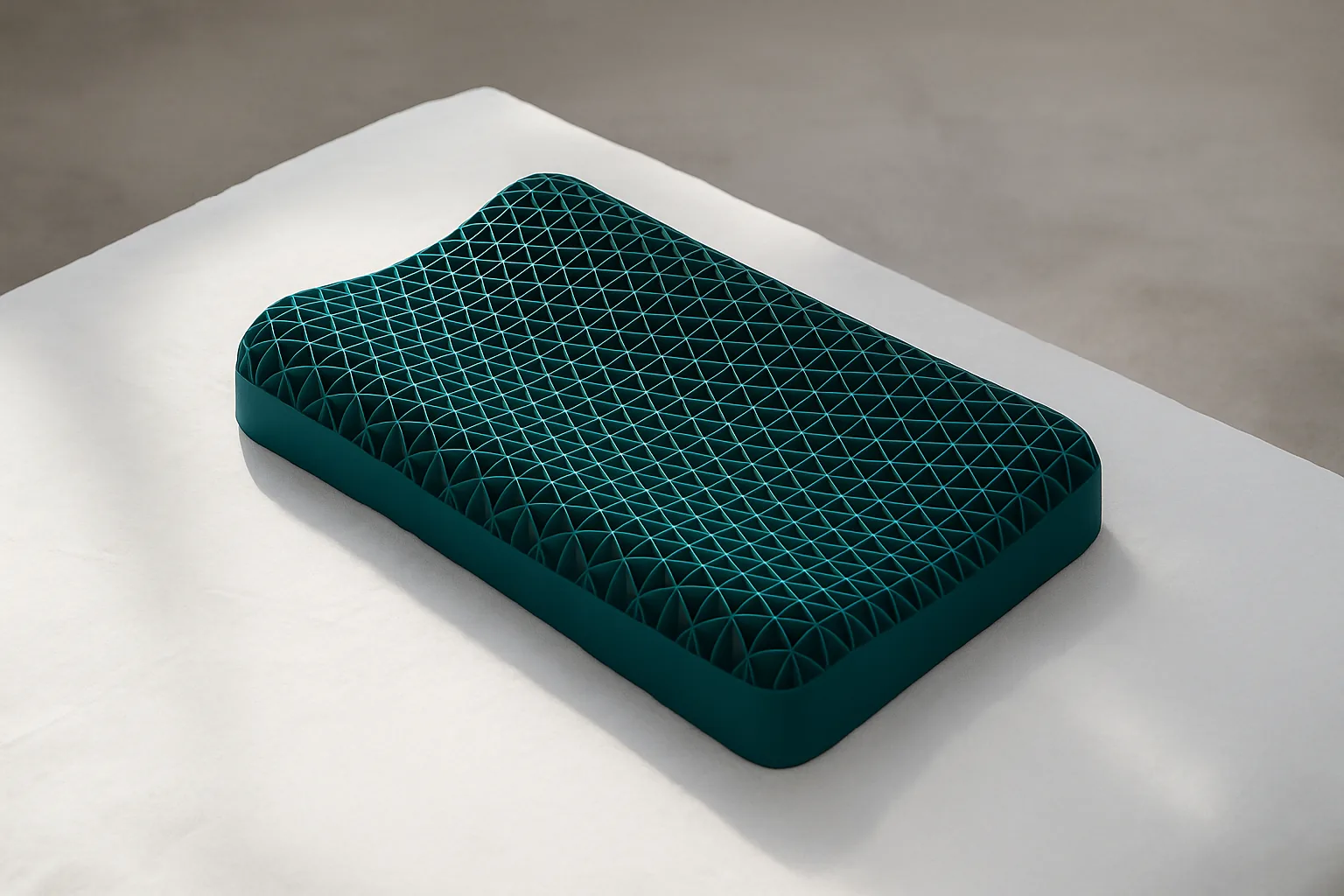
Two pillows. One material. Wildly different outcomes.
Both products use TPE — thermoplastic elastomer — a soft, food-grade polymer extruded into a grid. That part is identical. TPE grid is a real material breakthrough; it outperforms any foam I've ever tested for pressure relief, sleeps measurably cooler, and lasts longer than down or polyester fill. The Purple Pillow proved the concept. There is no question that grid pillows work.
The question I went into this evaluation with — the only question that actually matters when you're deciding what to buy — is which implementation works better when you've been sleeping on it for eight hours.
Three things neither product page will tell you.
One of these weighs almost twelve pounds.
The Purple Pillow weighs in at 11.7 lbs. That is the kind of fact you don't notice until 3 a.m. when you go to flip it and you can't. Changing the pillowcase feels like rearranging furniture. The Onyx is roughly 7 lbs.
You interact with a pillow forty times a night while half-asleep. Four pounds of difference is the thing you'll notice every single one of those forty times — and never read about in the spec sheet.
Same grid material, different geometry.
Both pillows use TPE. The grids look superficially similar in marketing photos. They are not the same product. Purple's grid is a flat, uniform slab — a single density of cells across the whole surface. Onyx contours the grid: a lower zone for the neck (about 8 cm), a higher zone for the head and upper shoulder (about 10 cm).
If you sleep on your back perfectly flat all night you may not feel the difference. Almost nobody sleeps that way.
The trial period is a confidence statement.
Purple gives you 30 nights. Onyx gives you 100. A grid pillow takes two-to-three weeks to break in — which means Purple's trial barely gives you a week of meaningful evaluation after the adjustment period. Onyx gives you over two months.
I think it's worth asking why a company that has been selling a successful product for years is more nervous about returns than the newer entrant.
The grid, looked at side-on.
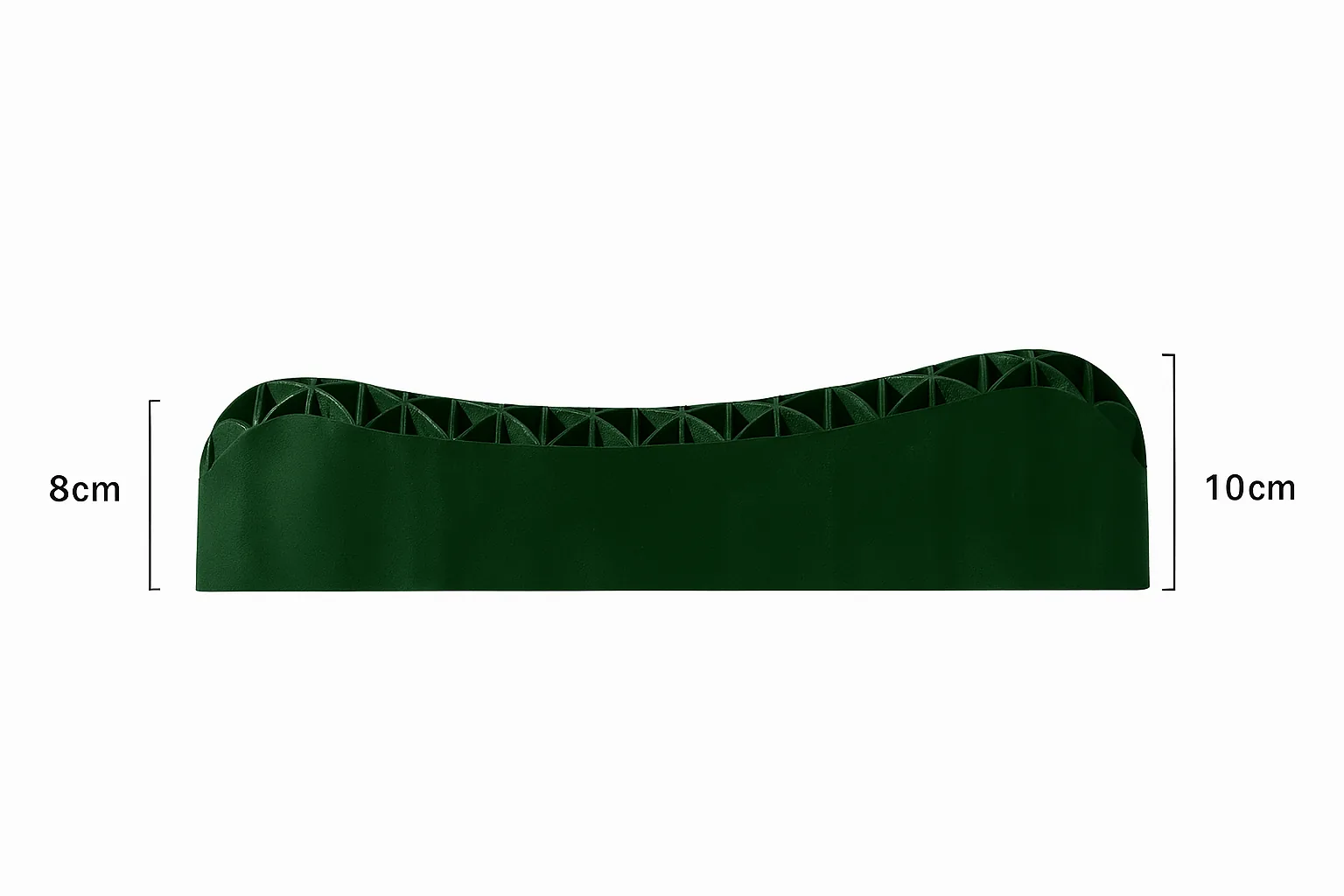
This is the Onyx in profile. The two heights are not decorative. The 8 cm lower edge cradles your neck when you're on your back; the 10 cm upper edge fills the gap between your neck and shoulder when you roll onto your side. Both zones use the same TPE grid; only the geometry changes.
The Purple Pillow has neither zone. It is the same height across the whole surface.
The definitive spec sheet.
Both pillows, fifteen rows. The categories that matter when you've been sleeping on it for a month.
| Spec | Onyx AeroMatrix | Purple Pillow |
|---|---|---|
| Grid material | Adaptive TPE honeycomb | GelFlex Grid (TPE) |
| Surface geometry | Contoured — 8cm / 10cm zones | Flat, uniform slab |
| Weight | ~7 lbs | 11.7 lbs |
| Cooling | Structural airflow — does not fade | Structural airflow — does not fade |
| Trial period | 100 nights | 30 nights |
| Warranty | 1 year | 1 year |
| Cover | Machine-washable Hex-Weave | Machine-washable cover |
| Adjustable height | Fixed contour | 3 settings (removable boosters) |
| Material safety | OEKO-TEX® Std 100Tested for 100+ harmful substances across textiles | CertiPUR-US®Foam-related substances |
| Shipping | Free worldwide | Free U.S. only |
| Reviews | 3,500+ · 4.6 ★Most common themes: neck pain relief, cooling that lasts | 16,735 · 3.9 ★Polarised; complaints about weight + flat profile |
| Best for | Side & back sleepers | Sleepers who want adjustable loft |
| Price (current) | $9950% off, limited time | ~$159Varies by retailer |
← Drag to compare →
Why ergonomic contouring matters more than the grid pattern.
Most chronic morning neck pain, most tension headaches, most "I woke up wrong" mornings trace back to one mechanical failure: the pillow you slept on did not match the geometry of your neck. Your head tilted off-axis. Your trapezius compensated for six hours. You woke up paying for it.
A flat grid pillow — even a very well-engineered one — is a flat surface. Side sleepers especially need a fill in the gap between the neck and the shoulder, and a flat surface doesn't have it. The Purple is excellent at pressure relief and cooling. It does not contour. The Onyx contours.
If you've ever flipped your pillow looking for a pocket of support that isn't there, the contour is the thing.
Cooling: both good. One genuinely better.
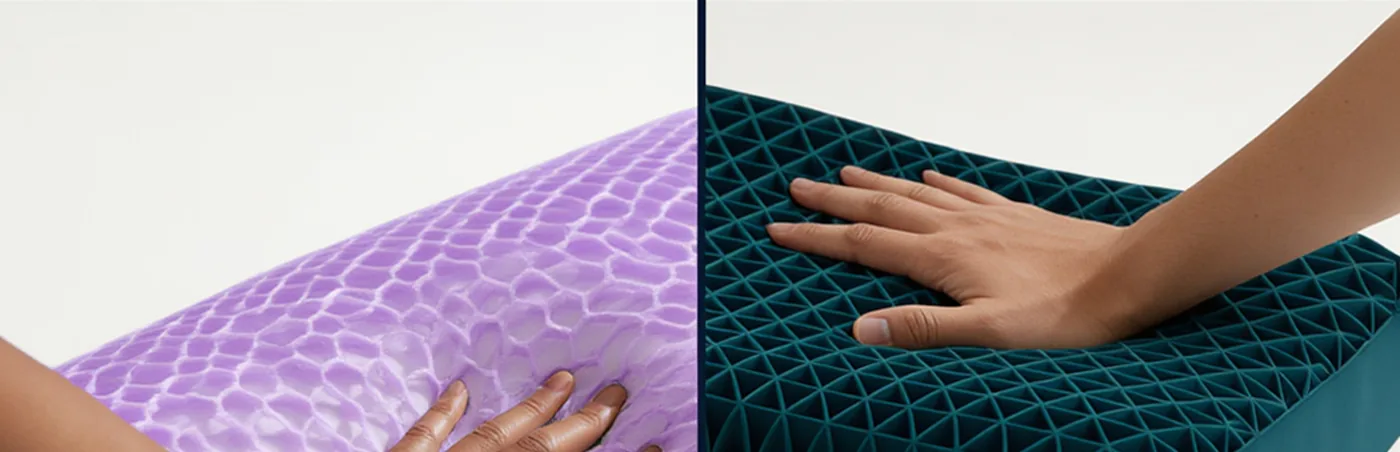
Grid pillows beat memory foam on temperature regulation by a wide margin. Both products do this. The Purple GelFlex Grid sleeps measurably cooler than any foam I've tested; the Onyx AeroMatrix sleeps measurably cooler than the Purple — the contour shape means more surface area is exposed to air, and the honeycomb cell geometry is more open than Purple's denser uniform lattice.
I will say this clearly: if cooling is your only criterion, both will solve your problem. If cooling is a tiebreaker, the Onyx wins it by a noticeable margin.
Material safety: OEKO-TEX vs. CertiPUR.
The Onyx carries OEKO-TEX® Standard 100 certification — a textile-industry standard that tests for over a hundred substances across the entire pillow. The Purple carries CertiPUR-US® — a foam-industry standard scoped to specific foam-related substances. Both are legitimate. OEKO-TEX is broader in scope.
For a product that sits inches from your face for seven to nine hours a night, broader is better.
Where Purple actually wins.
Let me be clear about what Purple does better — because it does. Any comparison that pretends one product is perfect and the other has nothing going for it has stopped being editorial and started being marketing. That's not the file I'm writing.
Adjustable height inserts
Purple's removable booster layers let you tune the loft in a way Onyx's fixed contour cannot. If you know your preferred head-and-neck height to the millimetre — or if you live with someone whose preference is the opposite of yours — the booster system is a real, useful piece of engineering. The Onyx has one shape. Purple has three.
The proven original
Purple invented the consumer grid pillow as a category. Tens of thousands of reviews, more than five years of in-market history, and a quality-control track record that is, frankly, better than most of the brands trying to chase them. Onyx is newer. Newer products fail more often than older ones. That is a real reason to consider Purple if you are conservative about what goes near your head at night.
Brand trust and retail availability
Purple is in stores. You can drive to a mattress retailer, put your head on one, and return one without dealing with a courier. That familiarity has value — particularly if you've already bought one of their mattresses and you trust the company. Onyx is direct-to-consumer; the trial period is 100 nights, but the trust has to be earned from a website.
The detail that changed my mind.
I was, genuinely, about to call this one a draw. By night fifteen I had pages of evaluation notes that read as a tied scorecard. Both pillows had earned their reputation. Both grids were excellent. Both slept cooler than any foam I'd tested in three years. I had a tentative draft for an article called "Two Good Pillows, Different Sleepers" and I was prepared to file it.
What changed it is the gap between how I felt at 10 p.m. and how I felt at 6 a.m.
At 10 p.m., both pillows felt great.
Every pillow feels great at 10 p.m. You're tired, you put your head down, you think this is nice. Spec sheets are written at 10 p.m. Reviews on product pages are written at 10 p.m. I am not going to file a comparison article based on how a pillow feels at 10 p.m.
At 6 a.m., after eight hours of body heat, micro-adjustments, and sustained pressure:
Still cool. Still flat. Still heavy.
The cooling worked, every night, all the way through. Credit there. But the flat surface meant my head had been tilted off-axis on my side for hours; I woke up with the familiar stiff right shoulder I usually only feel after a long flight. Flipping the pillow at 3 a.m. genuinely woke me up — eleven pounds is a lot of pillow to move with one hand.
No flip. No tilt. No shoulder.
I woke up in the same position I went to sleep in. My head was still inside the contour. My shoulder did not hurt. I had not, by my own observation log, flipped the pillow at any point in the night. By week three I had stopped checking.
The difference between these two pillows isn't the material. It's the design. Purple invented the grid. Onyx finished it.
"I returned the Purple on day 22. I had a return window of 30 nights; I used 22 of them; and on the morning of day 22 it became unambiguous to me which file I was actually writing."
— evaluation log, day 22What other sleepers are saying.
Numbers from publicly verified review aggregators. The themes are summarised, not cherry-picked — most common positives and most common complaints in each.
Onyx AeroMatrix
Verified buyers · multi-platform
Most common themes: neck pain relief, cooling that lasts the whole night, improved morning energy. Most common complaint: fixed contour doesn't suit every sleeper (which is what the 100-night trial is for).
Purple Pillow
Verified buyers · multi-platform
Polarised user base. Strong reviews on cooling and pressure relief; consistent complaints about weight, flat profile not providing enough neck support, and the short 30-night trial.
100 nights. Full refund if Purple was the better pillow.
The grid is the same material. The design is what changed. Sleep on the Onyx for 100 nights — if I'm wrong and Purple really was the right call for you, send it back. The risk is theirs.
Get the Onyx Pillow — $99 →